Kitchen Deep Cleaning · Auburn

Restaurant Kitchen Deep Cleaning in Auburn

Remove grease and cooked-on residue from hard-to-reach kitchen surfaces, then restore floors with a cleaning plan built around your equipment, operating schedule, and sanitation needs.

✓Equipment and wall detailing ✓Deep floor cleaning ✓Scheduling around service
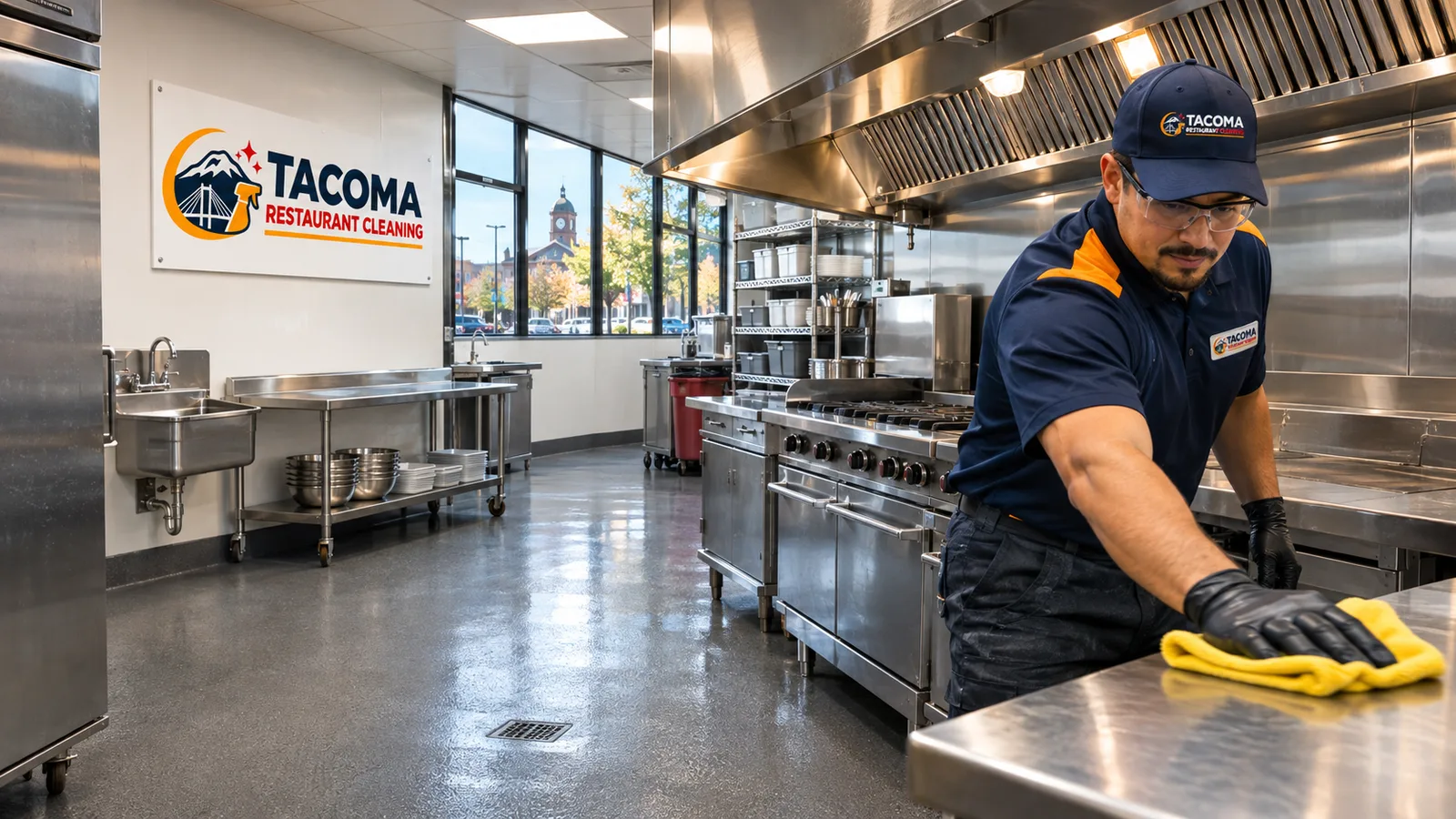
A commercial restaurant kitchen in Auburn after deep cleaning, with degreased stainless steel equipment, clean wall surfaces, and freshly scrubbed nonslip flooring.

Built Around Your Kitchen

Restaurant Kitchen Deep Cleaning Auburn Operators Can Schedule Around Service

Restaurant Kitchen Deep Cleaning Auburn addresses the grease, carbon, food residue, and soil that routine closing work does not fully remove. Tacoma Restaurant Cleaning builds the scope around the kitchen rather than applying one checklist to every operation. We assess cooking lines, preparation areas, washable walls, floor edges, drains, and accessible equipment surfaces, then identify what can be cleaned safely without disrupting connected systems.

Commercial kitchens accumulate residue in seams, beneath movable equipment, around casters, along wall and floor junctions, and behind splash zones. If that buildup remains, it can hold odors, attract pests, create slip concerns, and make daily sanitation harder. Deep cleaning resets these problem areas so the kitchen crew can maintain them more effectively.

Our Tacoma-based crew works in Auburn with a practical, workmanlike approach. Tacoma Restaurant Cleaning is a restaurant company Tacoma homeowners rely on, applying the same care to planning, surface protection, and clear communication on every job. We confirm access, equipment limitations, water availability, and timing before work begins. The written scope also distinguishes included cleaning from tasks that require a hood-cleaning specialist, equipment technician, pest professional, or drain contractor.
Detailed Service Scope

What a Commercial Kitchen Deep Clean Can Cover

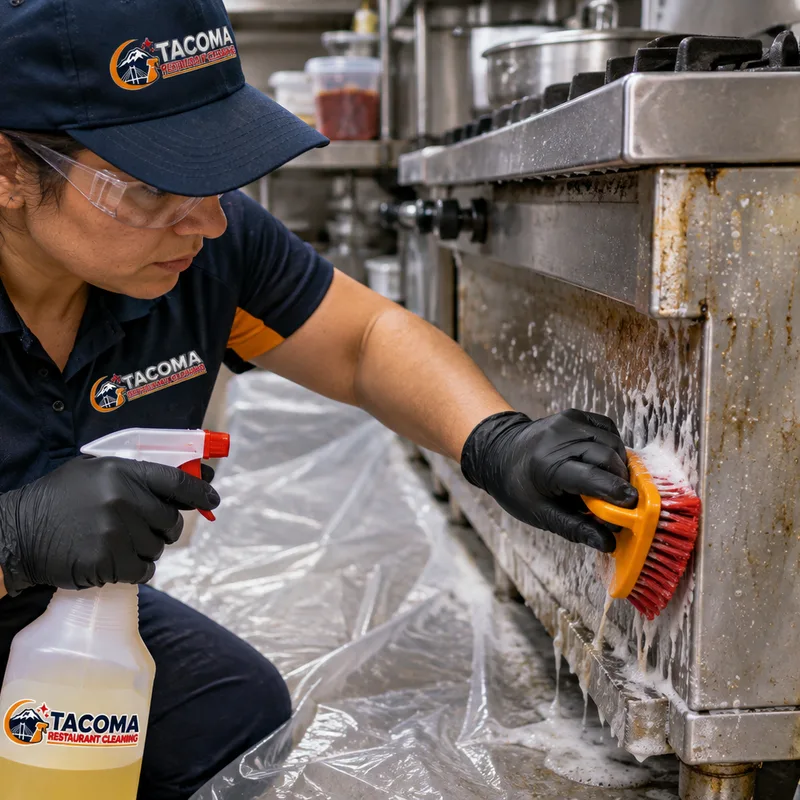
A trained cleaner applying degreaser and controlled agitation to the accessible side and base of commercial cooking equipment while protecting nearby surfaces.
Surface-specific chemistry and proper dwell time loosen grease without relying on excessive product.

The exact scope depends on the kitchen layout and condition. Common work areas include stainless steel equipment exteriors, preparation tables, shelving, backsplashes, washable wall surfaces, kick plates, baseboards, floor edges, and accessible spaces beneath or behind movable units. Crews may use alkaline degreasers, dwell time, controlled agitation, scraping tools suited to the surface, and wet recovery equipment. Chemistry must match the material because aggressive products can discolor aluminum, damage painted finishes, or affect some resilient floors.

Heavy carbon on cooking equipment is different from ordinary grease film. It often needs repeated treatment and careful mechanical removal. Food-contact surfaces must be rinsed as required by the product label, and the restaurant remains responsible for its normal wash, rinse, and sanitize procedure before food preparation resumes. Cleaning should never involve opening gas or electrical components or moving equipment that cannot be safely disconnected.

Rainy Puget Sound weather can track grit and moisture into entrances and service corridors. Once that soil reaches a kitchen, it combines with grease and can make floors harder to maintain. Entry controls and regular mat care help, but periodic deep floor cleaning is needed when routine mopping leaves a dark film or sticky residue.

Detailed Cleaning Scope

High-Priority Cleaning Areas

Cooking-Line Exteriors

Degreasing focuses on accessible fronts, sides, handles, ledges, kick plates, and surrounding splash areas. Internal mechanical, gas, and electrical components stay outside the scope unless qualified equipment service is arranged.

Walls and Backsplashes

Washable wall panels, tile, grout lines, and backsplashes collect airborne grease near active cooking zones. The method is adjusted for stainless steel, tile, sealed surfaces, and painted finishes.

Under and Behind Equipment

Where equipment can be moved safely, cleaning removes crumbs, grease, and residue around casters, legs, utility penetrations, and floor edges. Access requirements are agreed on before the crew arrives.

Preparation and Storage Areas

Shelving, table bases, nonfood-contact exteriors, and reachable corners are cleaned according to the approved scope. Food, utensils, and open ingredients must be removed or securely protected.

Floor Edges and Drains

Detail work targets coved bases, grout lines, corners, and the floor surrounding accessible drains. Drain clearing, plumbing repair, and grease-interceptor service are separate trades.

Waste and Service Zones

Interior waste staging areas and service corridors can be included when suitable drainage and access are available. These zones often need concentrated soil removal before routine cleaning can keep up.

Floor Care by Surface

Restaurant Floor Cleaning Auburn Kitchens Need

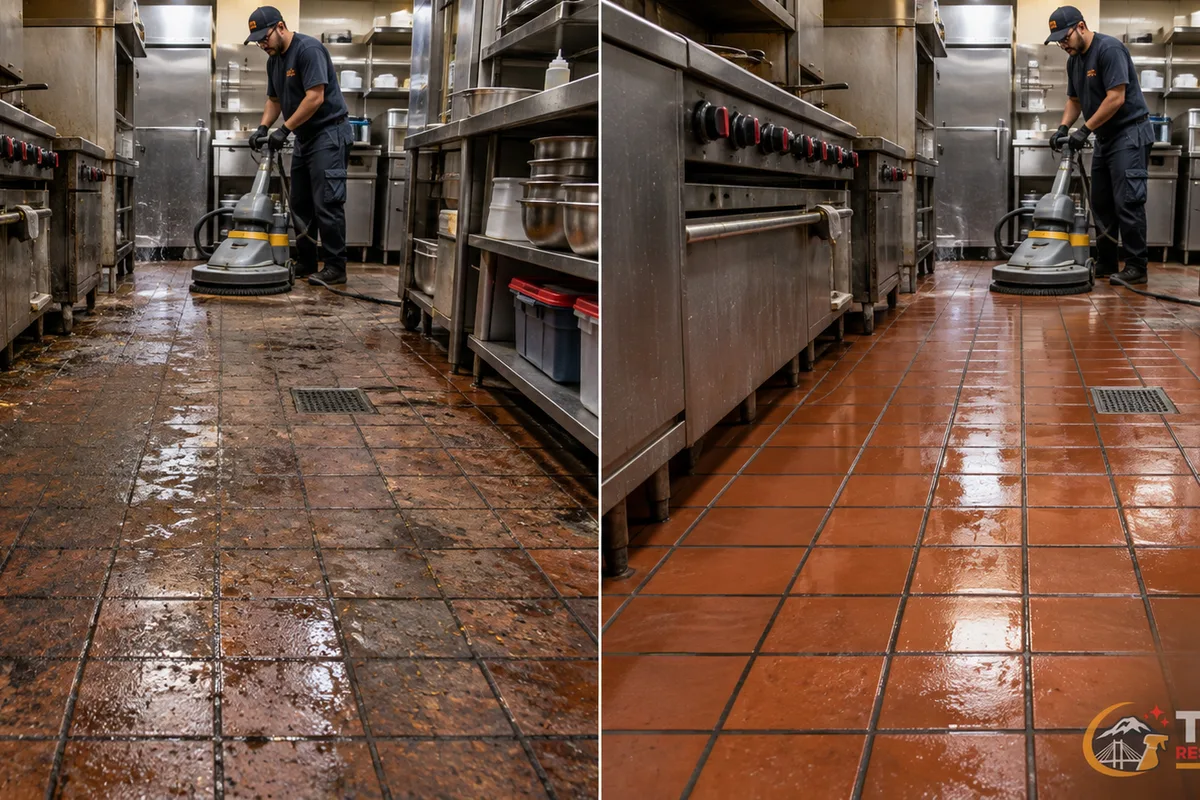
A side-by-side view of a greasy commercial quarry-tile kitchen floor before cleaning and the same floor after agitation, soil recovery, and rinsing.
Deep cleaning removes grease film and embedded soil; it does not conceal damaged grout or worn flooring.

Restaurant Floor Cleaning Auburn requires more than spreading stronger degreaser across the room. Old mop solution, incorrect dilution, dirty tools, and insufficient rinse recovery can leave a film that attracts new soil. A deep floor service starts by identifying the flooring and its condition. Quarry tile and grout, sealed concrete, resinous floors, and commercial resilient materials do not all tolerate the same brush, chemical, water volume, or agitation.

The crew dry-removes loose debris, pre-treats greasy areas, allows suitable dwell time, and agitates the floor with equipment chosen for the surface. Edges and tight spaces receive separate attention. Soiled liquid is recovered rather than pushed toward inaccessible areas, and the floor is rinsed as needed to reduce residue. Cleaning improves traction by removing contamination, but it cannot repair worn texture, loose tile, failed grout, damaged coatings, or improper drainage.

Floor drains are protected from solids during cleaning. Wastewater handling should follow the facility's approved procedures and local requirements; wash water should not be directed to outdoor storm drains. After service, the floor needs enough drying time before staff, carts, or deliveries move through the area.

From Walkthrough to Review

How the Deep-Cleaning Process Works

  1. Walk Through the Kitchen

    We review the cooking line, floors, access points, movable equipment, utilities, sensitive materials, and the restaurant's operating window. Photographs or an on-site assessment may be used to clarify heavy buildup and access constraints.

  2. Define the Written Scope

    The plan lists included surfaces, exclusions, preparation duties, equipment movement, cleaning methods, and expected drying time. It also identifies repairs or specialist services that cleaning alone cannot address.

  3. Prepare and Protect

    The restaurant removes food and movable smallwares as agreed. The crew sets up safety signs, protects adjacent areas, dry-removes debris, and confirms that equipment is cool and safe to work around.

  4. Degrease and Detail

    Cleaning proceeds by zone using suitable chemistry, dwell time, agitation, and soil recovery. Detail work addresses corners, edges, casters, bases, seams, and other accessible areas missed during routine closing.

  5. Rinse, Recover, and Review

    Residue is rinsed where the surface and product require it, and wastewater is recovered through the planned method. We complete a walkthrough so managers can review the included work before the kitchen returns to normal use.

Local Access and Scheduling

Planning for Auburn Restaurants and Food Facilities

Auburn's commercial areas include very different operating conditions. Downtown Auburn restaurants may have tighter loading access and shared service areas, so equipment staging and arrival timing need advance coordination. Businesses near the SuperMall area often work around retail traffic and scheduled deliveries. Along the Auburn Way corridors, busy meal periods can leave a narrow overnight or early-morning cleaning window. Kitchens near warehouse and industrial properties may have larger production areas, loading traffic, and more floor soil entering through service doors.

Those conditions affect the plan, but the kitchen itself determines the work. We ask when cooking equipment will be cool, whether carts and movable appliances can be relocated, where the crew may load in, which sink or water source is approved, and when floors must be ready for foot traffic. If a facility shares a loading area or has controlled building access, the manager should arrange entry before the appointment.

The restaurant should also disclose loose grout, damaged electrical covers, active leaks, unstable equipment, pest activity, or floors that remain slippery after normal cleaning. These conditions can change the method or require another contractor first. Tacoma Restaurant Cleaning operates from S Steele Street in Tacoma and coordinates Auburn work with enough detail to reduce interference with food deliveries, prep, and opening duties.

Planning Your Budget

How Much Does Restaurant Kitchen Deep Cleaning Cost in Auburn?

Restaurant kitchen deep cleaning in Auburn typically ranges from $700 to $2,500 for a small or midsize kitchen, while large facilities or severe grease buildup may cost $2,500 to $6,000 or more. These are general planning ranges, not a binding quote.

Final pricing depends on square footage, floor type, grease and carbon levels, equipment movement, overnight scheduling, wastewater recovery, and the number of detailed surfaces. Hood-system cleaning, equipment repair, drain service, and damaged-floor restoration are priced separately. The exact cost is confirmed after an on-site assessment or a detailed review of the kitchen.

Schedule the work before buildup limits access or turns an ordinary cleaning window into a larger shutdown. A clear scope will identify the priority zones, preparation requirements, and realistic time needed for the kitchen to dry.

Call for a Free Quote

Common Questions

Questions Auburn Restaurant Managers Ask

How long does restaurant kitchen deep cleaning take in Auburn?

A small kitchen may take one shift, while a large or heavily soiled operation can require a longer window or phased work. Equipment access, floor drying, carbon buildup, and the number of surfaces all affect timing. Downtown loading limits or a narrow operating break along Auburn Way should be discussed during scheduling.

Can kitchen deep cleaning be completed overnight?

Yes, overnight cleaning is often possible when the kitchen can be shut down, cooking equipment has cooled, and the crew has approved access. The schedule must also allow time for rinsed surfaces and floors to dry before morning preparation begins. Food, utensils, and smallwares should be removed or protected before arrival.

Does deep cleaning include the exhaust hood and ductwork?

Hood plenum, fan, and duct cleaning should be handled under a separate commercial kitchen exhaust-cleaning scope. General deep cleaning can address accessible exterior hood surfaces if they are listed in the proposal, but it does not replace specialist cleaning of the exhaust system or its required documentation.

Can Restaurant Floor Cleaning Auburn remove every slippery area?

Floor cleaning can remove grease film, residue, and embedded soil, but it cannot correct worn texture, failed coatings, loose tile, damaged grout, or poor drainage. Quarry tile, resinous flooring, and sealed concrete each require a suitable chemical and agitation method. Persistent traction problems should be assessed after the floor is clean and dry.

Do we need to move equipment before the crew arrives?

The agreed preparation plan determines who moves each item. Light carts and mobile units may be relocated after utilities and floor conditions are checked, while hard-connected, unstable, or very heavy equipment should be handled by qualified personnel. Auburn facilities with tight service corridors should confirm a staging area in advance.

How often should an Auburn restaurant schedule deep cleaning?

The interval should be based on cooking volume, menu, equipment layout, floor condition, and how quickly grease returns after daily cleaning. High-output frying or grilling can require shorter intervals than light food preparation. A walkthrough can identify which zones need periodic service and which can stay on the restaurant's daily schedule.

What should our staff do before the appointment?

Staff should remove exposed food, utensils, countertop appliances, and personal items from the work area, then cool and shut down equipment as agreed. Managers should identify sensitive surfaces, leaks, loose flooring, alarm procedures, approved water access, and any restricted drains. Clear preparation gives the crew more time for detailed cleaning.

Define the Right Scope

Plan a Cleaner, Safer Kitchen Reset

Tell Tacoma Restaurant Cleaning about the kitchen size, floor material, grease conditions, operating hours, and priority problem areas. We will help define a practical scope and schedule for your Auburn facility.