Overnight Cleaning · Tacoma

Overnight Restaurant Cleaning

Start each service day with a clean kitchen, dining room, and restroom. We build recurring night schedules around your closing routine, floor plan, and sanitation priorities.

✓Recurring night schedules ✓Kitchen, dining, and restrooms ✓Scheduled after closing
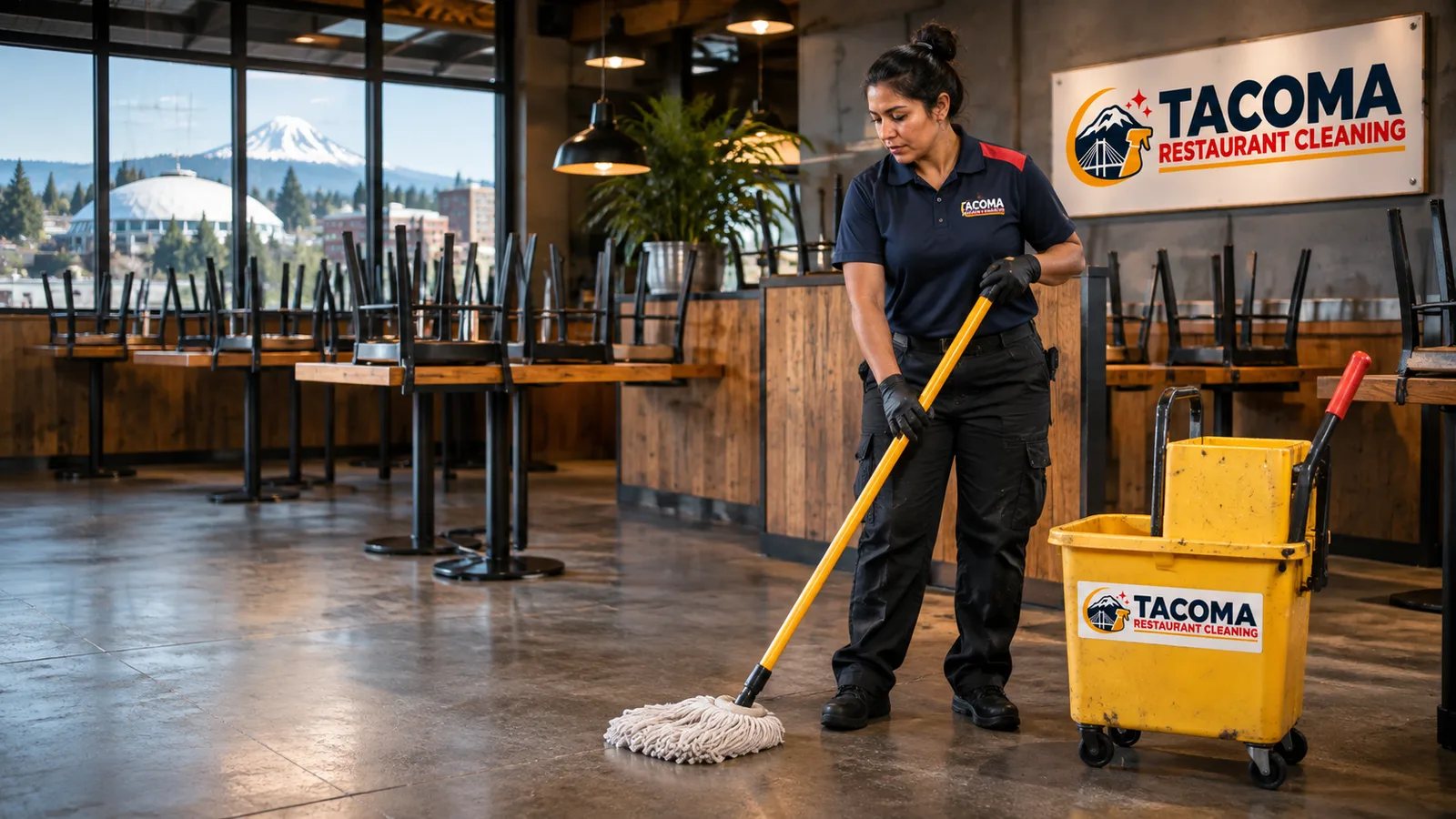
A professional janitorial worker cleaning a restaurant dining room after closing, with chairs raised and the floor ready for detailed mopping.

Ready Before Opening

Reliable Cleaning After the Last Guest Leaves

Overnight Restaurant Cleaning gives your staff a clean, orderly workplace before prep begins and guests return. Tacoma Restaurant Cleaning handles routine janitorial work after closing, when crews can reach dining floors, restrooms, service counters, and accessible kitchen surfaces without interrupting customers or employees.

Our recurring plans are based on how your restaurant actually operates. A quick-service dining room with heavy daily foot traffic needs a different scope than a reservation-based dining room or a late-closing bar and grill. We identify the tasks required every night, the detail work suited to a rotating schedule, and the access and lockup procedure your managers want followed. To support your operation, Tacoma's restaurant specialists coordinate the work around closing duties and morning prep instead of relying on a generic commercial checklist.

Tacoma's wet fall and winter conditions can bring water and tracked-in soil across entrances and dining floors. Matting areas, entry glass, floor edges, and traffic lanes may need extra attention during rainy periods. Restaurants near the Tacoma Dome and downtown event venues can also experience sharp changes in guest volume, so the cleaning plan should account for busy nights rather than assume every shift is the same.

Nightly Service Scope

What Nightly Restaurant Cleaning Covers

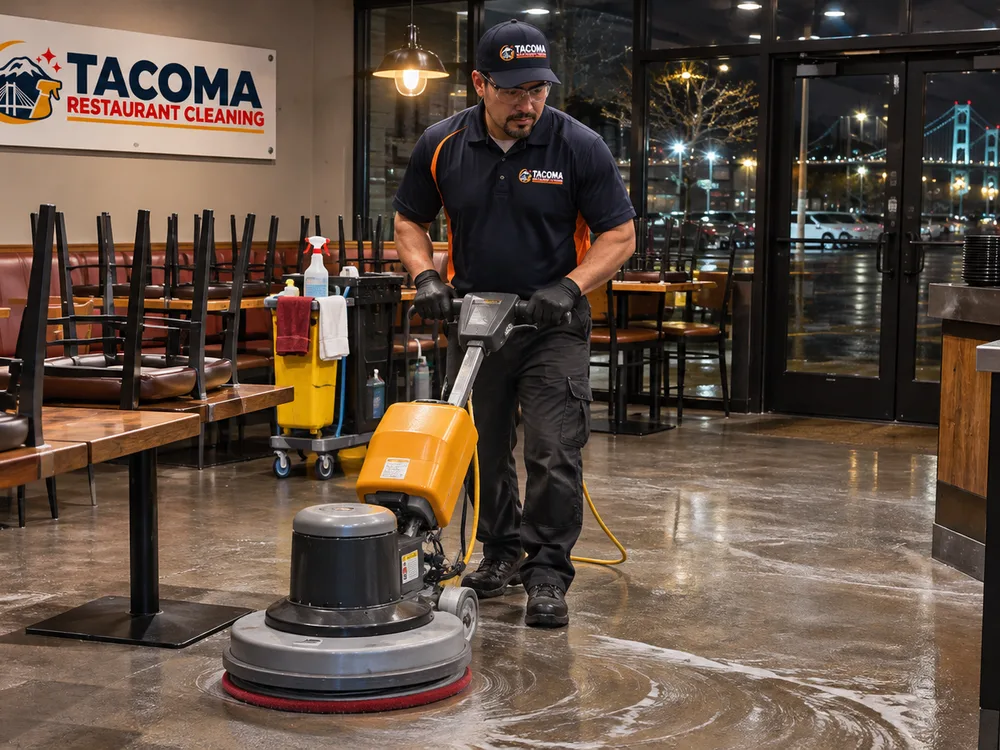
An overnight cleaner using a floor machine in an empty restaurant dining area while tables, entry glass, and service stations are visible.
Night work allows thorough floor care without disrupting guests or service staff.

A restaurant night cleaning scope should name the surfaces, frequencies, and expected finish. In the dining area, routine work may include vacuuming or mopping floors, cleaning tables and chair touchpoints, wiping ledges and partitions, removing trash, spot-cleaning interior glass, and addressing visible spills or crumbs around baseboards. Entry doors and host areas receive special attention because they shape the first impression the next day.

Accessible kitchen and back-of-house work can include sweeping and degreasing floors, mopping with the appropriate cleaner, wiping exterior surfaces of equipment, cleaning prep-area touchpoints, emptying waste, and cleaning staff areas. Food, utensils, and chemicals must remain separated. Cleaning crews should follow the restaurant's instructions for equipment that must not be moved, opened, sprayed, or disconnected.

Recurring Restaurant Cleaning can also include scheduled detail tasks such as floor-edge cleaning, low-wall spot cleaning, vents within the agreed scope, and buildup around fixed equipment. Exhaust hood and duct cleaning, pest control, and internal food-contact equipment sanitation are separate specialist responsibilities unless they are expressly included in a written agreement.

Defined Nightly Tasks

A Practical Restaurant Janitorial Cleaning Scope

Dining Areas

Floors, tables, chairs, booths, ledges, partitions, waste receptacles, and visible touchpoints are cleaned according to the agreed nightly checklist. The method is matched to the surface so wood, resilient flooring, tile, and carpet receive suitable care.

Kitchen and Back of House

Crews address accessible floors, exterior equipment surfaces, approved prep-area surfaces, waste, and staff spaces. Degreaser needs adequate dwell time to loosen oily soil before agitation and rinsing or recovery.

Restaurant Restroom Cleaning

Fixtures, counters, mirrors, dispensers, partitions, doors, touchpoints, and floors are cleaned and disinfected. Supplies can be replenished when the restaurant provides them or includes restocking in the service agreement.

Entry and Guest Touchpoints

Door glass, handles, host stands, railings, and payment-area touchpoints can be included. These highly visible areas often need service every night, especially after rainy weather or a high-volume shift.

Trash and Recycling

Interior bins are emptied, liners are replaced, and waste is taken to the restaurant's designated collection area. The scope should specify cardboard, glass, used cooking oil, and any waste streams managed separately.

Rotating Detail Work

Tasks that do not require nightly service can follow a weekly or monthly rotation. Examples include baseboards, chair legs, floor edges, selected interior glass, and accessible high dusting.

From Walkthrough to Lockup

How Restaurant Night Cleaning Works

  1. Walk Through the Restaurant

    We review the dining room, kitchen, restrooms, entrances, staff areas, waste route, floor materials, and any surfaces requiring special handling. The walkthrough also identifies security procedures and the times when cleaning can begin and must finish.

  2. Set Frequencies and Responsibilities

    The written scope separates nightly tasks from rotating detail work. It also states what your closing crew completes before handoff, such as storing food, clearing tables, moving approved floor items, and securing cash or sensitive materials.

  3. Establish Access and Lockup

    Managers approve the entry method, alarm instructions, key or access-code handling, restricted areas, and final lockup check. Clear escalation contacts matter when a door will not secure, an alarm condition occurs, or a leak is discovered.

  4. Clean in a Safe Order

    Crews generally work from cleaner areas toward dirtier ones and use separate tools for restrooms and food-service spaces. Chemicals are labeled, used according to their directions, and given the required dwell time when disinfection is part of the task.

  5. Inspect and Adjust

    Completed work is checked against the scope, and recurring issues are documented. Cleaning frequencies can then be adjusted for seasonal soil, menu-related grease, changes in operating hours, or increased event traffic.

Repeatable Restroom Care

Restaurant Restroom Cleaning That Holds Up to Daily Use

Restaurant restrooms need a repeatable process rather than a quick wipe at closing. The work should begin with waste removal and dry soil pickup, followed by cleaning of fixtures and surfaces. When a disinfectant is used, the surface must remain visibly wet for the contact time listed on the product label. Wiping it dry immediately can prevent the product from being used as directed.

Color-coded cloths and dedicated restroom tools help prevent cross-contamination with dining and kitchen areas. Crews should clean toilets and urinals, partitions, sinks, counters, mirrors, door handles, dispensers, and floors with products suitable for each material. Odor problems should be traced to their source, including grout, floor edges, drains, or missed splash zones, rather than covered with fragrance.

Daily Restaurant Cleaning should also account for consumables and maintenance observations. A crew can report empty dispensers, slow drains, damaged fixtures, leaks, or failed lights, but janitorial cleaning does not replace plumbing or repair work. Assigning responsibility for soap, paper products, and liner inventory prevents avoidable shortages.

Local Scheduling and Access

Nightly Restaurant Cleaning Across Tacoma Service Areas

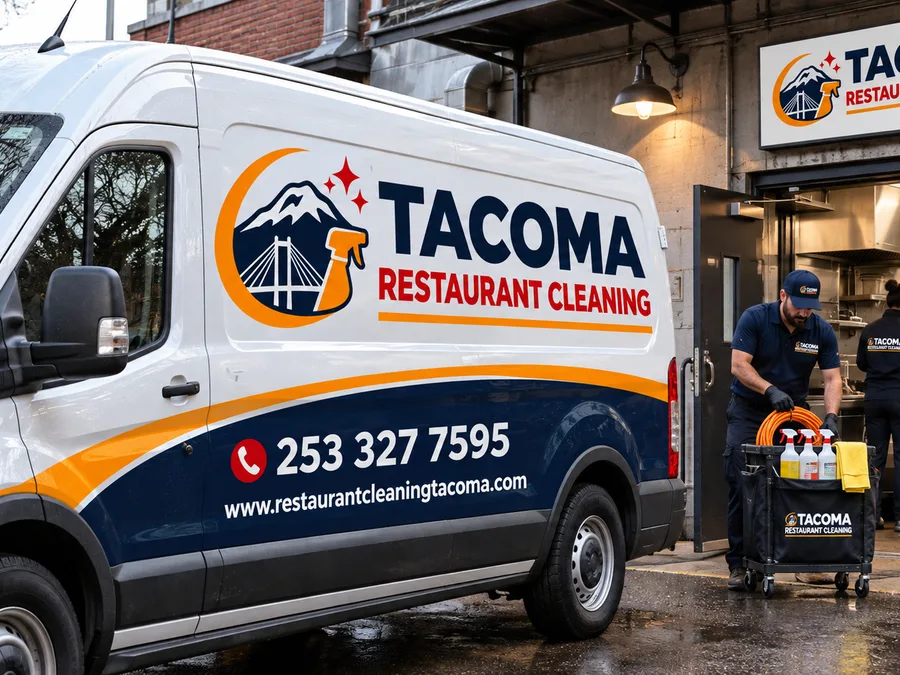
A janitorial crew unloading clearly labeled cleaning tools outside a Tacoma restaurant after closing on a rainy evening, with entry mats and wet pavement visible.
Local scheduling accounts for late closing times, security procedures, and rain-tracked entry soil.

Local restaurant settings affect scheduling and soil load. Downtown Tacoma and the Brewery District include dining businesses near offices, apartments, entertainment venues, and event traffic; late closing times and changing nightly volume call for a flexible start window. The Stadium District has restaurants mixed among residential, medical, and commercial properties, so quiet arrival, orderly waste handling, and careful lockup are practical concerns.

Along the Sixth Avenue District, evening dining and bar activity can keep guest areas occupied late. Crews need a confirmed handoff rather than arriving while staff are still serving. Proctor District restaurants operate within a walkable neighborhood business area where entry floors can collect wet soil during rainy weather. South Tacoma's commercial corridors include varied restaurant formats and larger parking areas, making exterior-to-interior soil control at entrances especially useful.

Washington food establishments operate under the Washington State Retail Food Code, and local food-safety oversight in Tacoma is handled by the Tacoma-Pierce County Health Department. A restaurant janitorial company supports the facility's cleanliness plan, but the permit holder and person in charge retain responsibility for food safety, employee practices, and code compliance. The written janitorial scope should fit the restaurant's approved operating procedures rather than blur those responsibilities.

Clear Scope and Accountability

Choosing Restaurant Janitorial Services in Tacoma

A dependable proposal should describe exactly what gets cleaned, how often it is cleaned, and what is excluded. Ask whether the company trains crews on chemical labels, dwell times, personal protective equipment, cross-contamination controls, and food-service restrictions. Safety Data Sheets should be available for the products used at your property.

Confirm who supervises the work, how substitutions are handled, and how a missed task is reported and corrected. Restaurant Janitorial Services Tacoma operators should also be able to document access procedures, alarm instructions, key control, and incident reporting. If service occurs after everyone leaves, establish who completes the final door check and what happens if the crew discovers water, broken glass, equipment left on, or another urgent condition.

Pricing should be tied to scope rather than vague promises. The main cost drivers are total cleanable area, number of restrooms, floor type, grease and soil level, service frequency, operating hours, access restrictions, consumable restocking, and the amount of periodic detail work. A walkthrough is the soundest way to set a recurring price because two restaurants with similar square footage may require very different labor.

Replace inconsistent closing cleanup with a written night schedule, defined responsibilities, and service timed around your restaurant's real operating hours.

Call for a Free Quote

Common Questions

Questions About Recurring Restaurant Cleaning

How often should a Tacoma restaurant schedule janitorial cleaning?

Guest-facing floors, restrooms, trash, and key touchpoints commonly need cleaning after every operating day, while detail work can follow a rotating schedule. The right frequency depends on guest volume, menu-related grease, floor materials, operating hours, and seasonal entry soil. Tacoma's rainy periods may require more frequent attention to mats, entrance glass, and traffic lanes.

Can your crew start after our restaurant closes late?

Overnight schedules can be built around a late closing time when the access window allows enough time to finish before morning prep. The walkthrough establishes the earliest start, required completion time, alarm procedure, restricted areas, and final lockup responsibility. Sixth Avenue and downtown restaurants with variable closing activity may benefit from a manager-confirmed handoff.

How is recurring restaurant cleaning priced?

Recurring service is priced after the cleanable area, frequency, floor types, restroom count, current condition, access window, and task list are reviewed. Heavy grease, detailed floor work, consumable management, and a short overnight window can add labor. A property walkthrough allows Tacoma Restaurant Cleaning to provide a written scope and confirm the actual recurring price.

Do restaurant janitorial crews clean cooking equipment and exhaust hoods?

Routine crews can clean approved exterior equipment surfaces and accessible areas named in the agreement, but internal equipment and exhaust-system cleaning require a separately defined scope. Your manager should identify surfaces that cannot be sprayed, moved, opened, or disconnected. Hood and duct work may require a qualified specialist and should never be assumed to be part of ordinary nightly cleaning.

Can you clean while our closing staff are still working?

Some tasks can begin while closing duties are underway, but the work sequence must keep chemicals, wet floors, waste movement, and cleaning tools away from food handling. Managers should define when each zone is released to the janitorial crew. Food must be stored and protected before nearby cleaning begins.

Who provides soap, paper products, liners, and cleaning chemicals?

Supply responsibility is set in the service agreement before work starts. A restaurant may provide its own restroom consumables, or restocking and inventory checks may be included in the recurring scope. Cleaning chemicals should be labeled, compatible with the surfaces, and accompanied by accessible Safety Data Sheets.

Can the nightly checklist change for events or unusually busy shifts?

Yes, the scope can include a process for approved schedule or task changes when advance notice is available. Restaurants near Tacoma Dome events or downtown entertainment activity may need added floor, restroom, trash, or entry attention after high-volume nights. The request process and any price change should be clear before the extra work is performed.

Build Your Night Schedule

Set Up a Cleaner Start to Every Service Day

Tell Tacoma Restaurant Cleaning about your hours, floor plan, problem areas, and current closing routine. We will discuss a recurring overnight scope that fits your kitchen, dining area, restrooms, access requirements, and morning deadline.