Kitchen Cleaning · Tacoma

Commercial Kitchen Cleaning Services in Tacoma

Detailed cleaning for cooking equipment, prep areas, floors, walls, and other hard-working surfaces, scheduled around your operating hours.

✓Equipment and prep areas ✓Deep or recurring service ✓Outside service periods
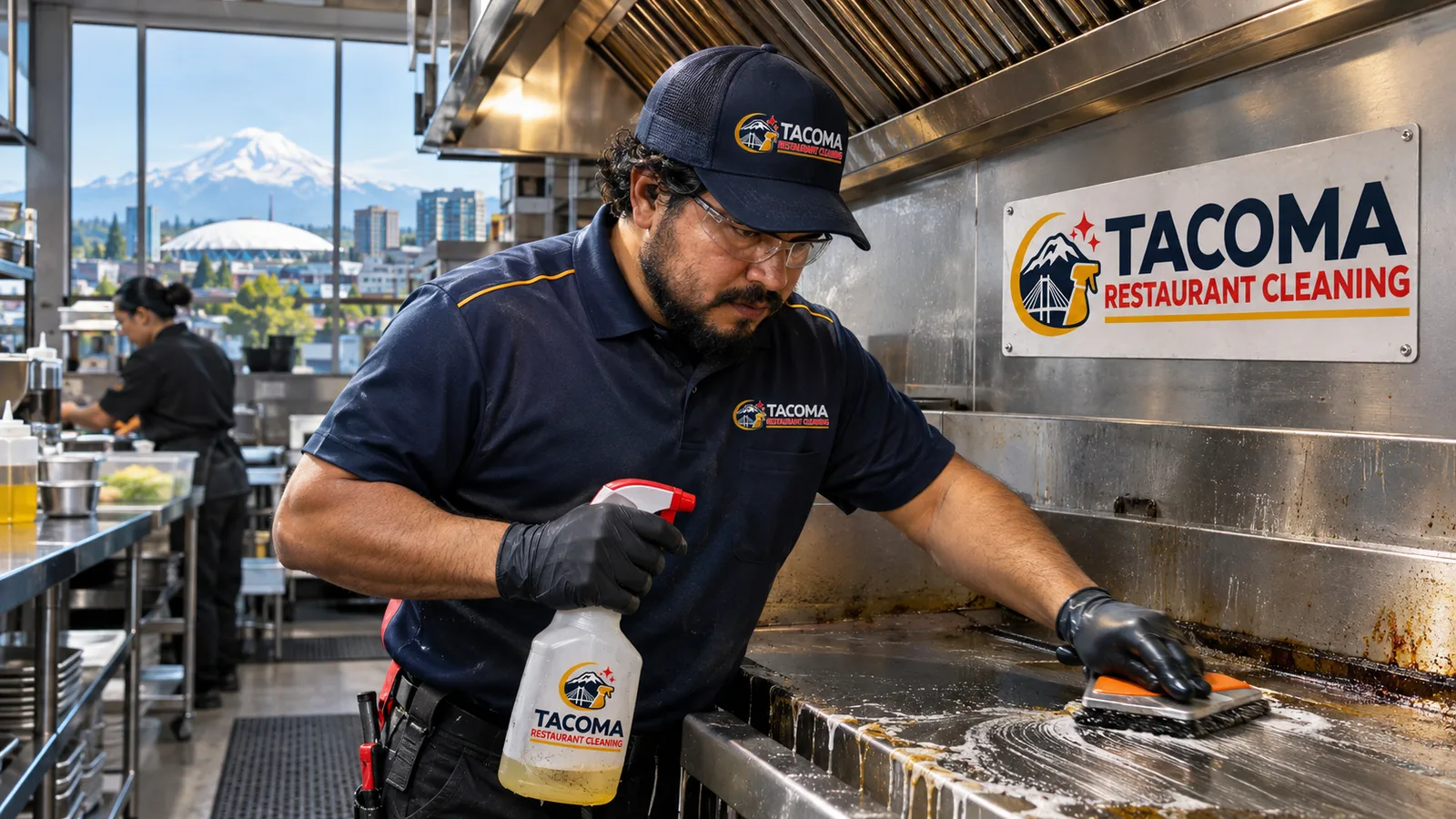
A professional cleaner degreasing stainless steel cooking equipment in an active Tacoma commercial kitchen.

Built Around Your Operation

A Cleaner Kitchen Without Disrupting Service

Commercial Kitchen Cleaning Services remove the grease, carbon residue, food debris, and soil that routine closing work can leave behind. Tacoma Restaurant Cleaning develops the scope around your equipment, kitchen layout, operating schedule, and problem areas. The work can cover a focused equipment project, periodic deep cleaning, or recurring kitchen cleaning services.

As Tacoma's trusted restaurant team, we work methodically around food preparation areas and plan access so your staff knows what must be cooled, cleared, or moved before cleaning starts. We can arrange work outside service periods when scheduling allows. Before the appointment, we identify included surfaces and discuss sensitive materials, restricted areas, and equipment that requires special handling.

A detailed scope matters because every food operation is different. A compact line with heavy fryer use has different cleaning needs than a bakery, commissary, café, or institutional kitchen. We match the methods to the soil and surface rather than applying one chemical or tool throughout the room.

Detailed Service Scope

What Professional Kitchen Cleaning Can Cover

Cooking Line and Equipment Exteriors

Degreasing for accessible exteriors and surrounding areas of ranges, fryers, griddles, ovens, steam equipment, and other line appliances. Equipment is cooled and treated according to surface and manufacturer considerations.

Preparation and Storage Surfaces

Cleaning for stainless steel tables, shelving, sinks, splash areas, carts, and other washable surfaces included in the agreed scope. Food, utensils, and loose supplies must be removed or protected first.

Floors, Edges, and Hard-to-Reach Areas

Scrubbing targets grease film, tracked soil, corners, edges, and accessible areas under or behind movable equipment. The method depends on flooring material, drainage, access, and buildup.

Walls and Washable Vertical Surfaces

Degreasing can include washable wall panels, tile, doors, base areas, and other vertical surfaces near preparation and cooking zones.

Detailed Kitchen Equipment Cleaning

Removable components and accessible equipment areas may be cleaned when they are included in the scope and can be handled safely. Internal electrical, gas, refrigeration, and mechanical service is excluded unless specifically qualified and arranged.

Recurring Maintenance Cleaning

Scheduled visits help control buildup between deeper projects. Frequency is based on cooking volume, menu, equipment use, staffing routines, and the condition observed during the initial assessment.

Condition-Based Methods

Commercial Kitchen Deep Cleaning Based on Actual Conditions

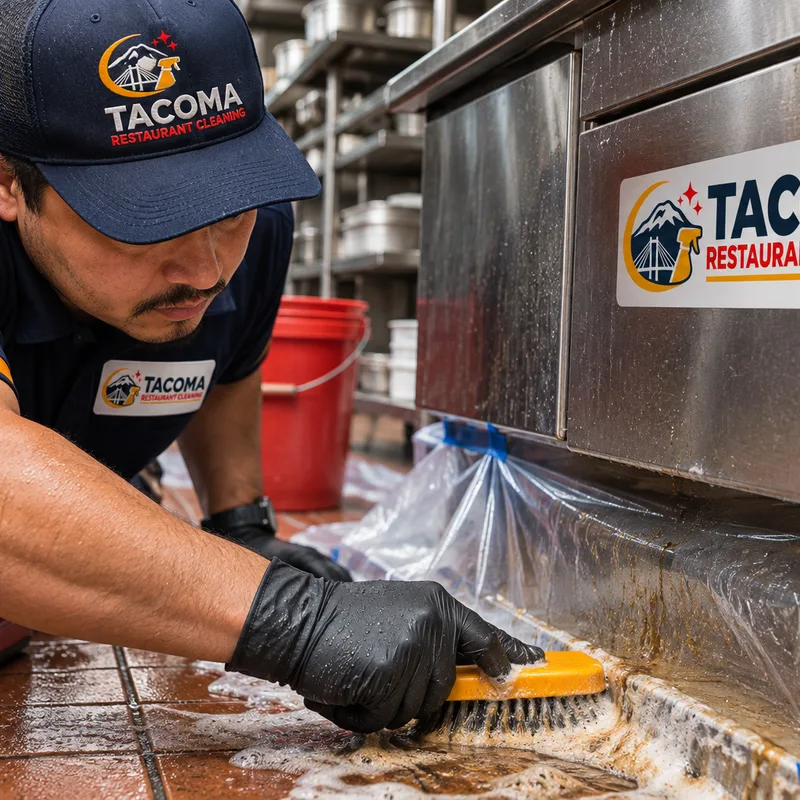
Close view of a technician agitating grease along a commercial kitchen floor edge beside stainless steel equipment, with nearby surfaces protected.
Tools and chemistry are selected for the residue and surface.

A useful deep-cleaning plan begins with the type of residue present. Alkaline degreasers can break down many cooking oils, while carbonized deposits may require longer dwell time, repeated agitation, and careful scraping with tools that will not damage the substrate. Stainless steel should be worked with its grain, and painted, aluminum, plastic, stone, and resilient flooring need compatible products.

We also account for the building and surrounding operation. Restaurants near Downtown Tacoma may have compact kitchens, limited loading access, and narrow service windows. Proctor District businesses often need work coordinated around neighborhood dining hours, while mixed-use buildings in Stadium District can require tighter control of noise, odor, and shared access. In the Lincoln District, varied restaurant layouts and cooking styles call for an equipment-specific scope rather than a standard checklist.

Tacoma's wet months also make entry soil and moisture control more noticeable near kitchen access points. Floor work should address tracked grit and greasy residue while keeping walkways controlled during cleaning. We establish which drains may be used, protect nearby areas, and avoid pushing heavy soil into places that are difficult to recover.

From Review to Inspection

How Restaurant Kitchen Cleaning Works

  1. Review the Kitchen and Priorities

    We discuss the kitchen layout, equipment, operating hours, current condition, access, and the results you need. Photos or an on-site review may be used to define a realistic scope.

  2. Confirm the Written Scope

    The plan identifies included equipment and surfaces, preparation responsibilities, expected access, scheduling, and any exclusions. This prevents assumptions about interiors, movable equipment, utilities, or specialty systems.

  3. Prepare and Protect the Work Area

    Equipment must be shut down and cooled as required. Food and small wares are removed or secured, sensitive controls are protected, and the team stages tools to limit interference with the surrounding operation.

  4. Degrease, Agitate, and Recover Soil

    The cleaners apply compatible products, allow appropriate dwell time, agitate buildup, and recover loosened soil. Detailed work proceeds in an organized sequence so cleaned areas are not contaminated again.

  5. Inspect the Included Areas

    The completed scope is reviewed for remaining residue and accessibility limits. Any condition that requires repair, disassembly by a qualified technician, or a separate specialty service is documented for the operator.

Planning Your Budget

How Much Does Commercial Kitchen Cleaning Cost in Tacoma?

Commercial kitchen cleaning in Tacoma typically costs about $500 to $2,500 for a deep-cleaning visit, while large kitchens or heavy restoration work may cost more. A focused equipment or floor project can fall below that range, and recurring maintenance may be priced per visit.

Final pricing depends on kitchen size, grease and carbon buildup, equipment quantity, required disassembly, access, parking, service hours, and whether equipment can be moved safely. A walkthrough or detailed assessment confirms the exact cost and written scope before cleaning is scheduled.

Kitchen Cleaning in Practice

The Details That Change a Kitchen's Condition

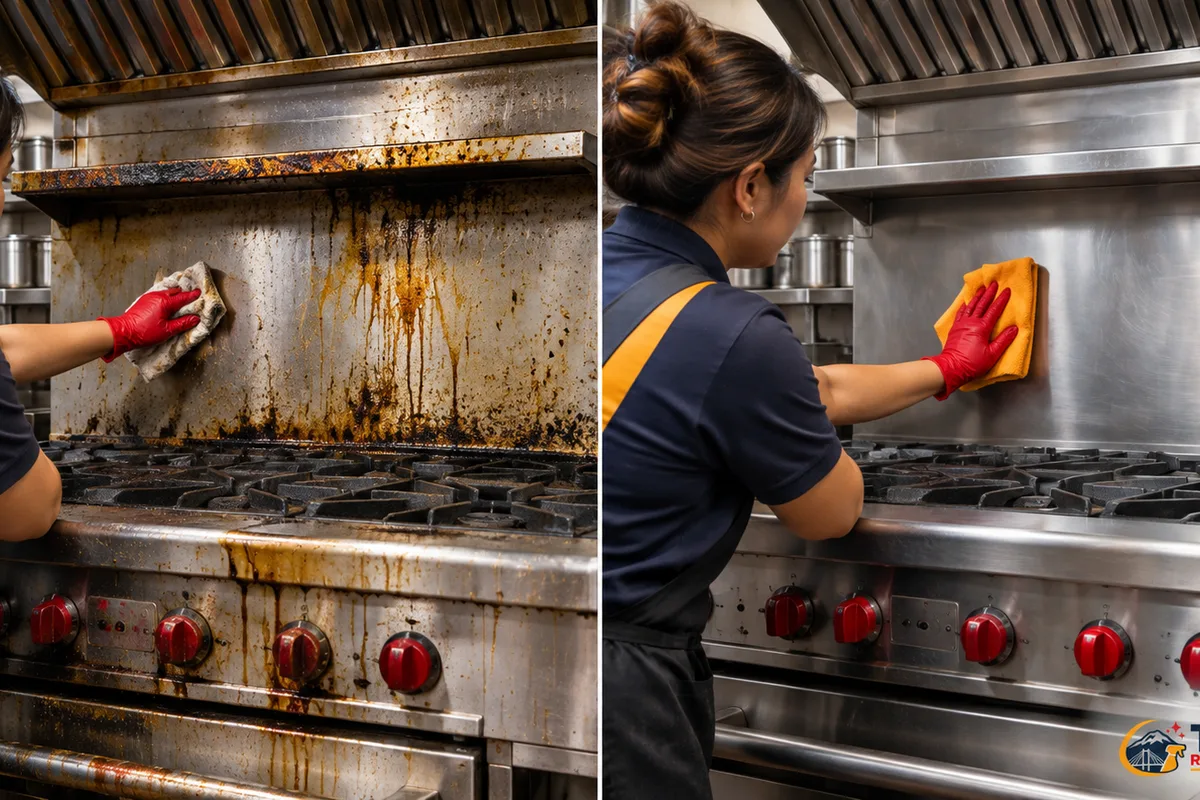
Matched before-and-after views of grease buildup and the cleaned result on an accessible commercial range exterior and backsplash.
Cooking-line degreasing
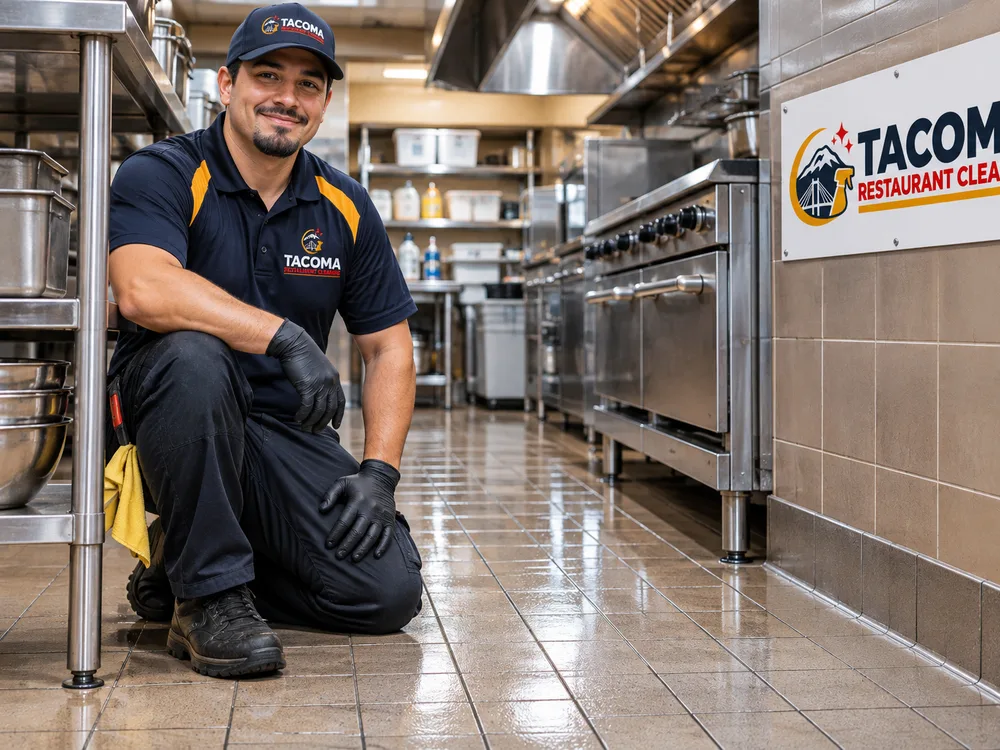
A freshly scrubbed commercial kitchen floor with clean edges around equipment legs and wall bases.
Floor and edge cleaning
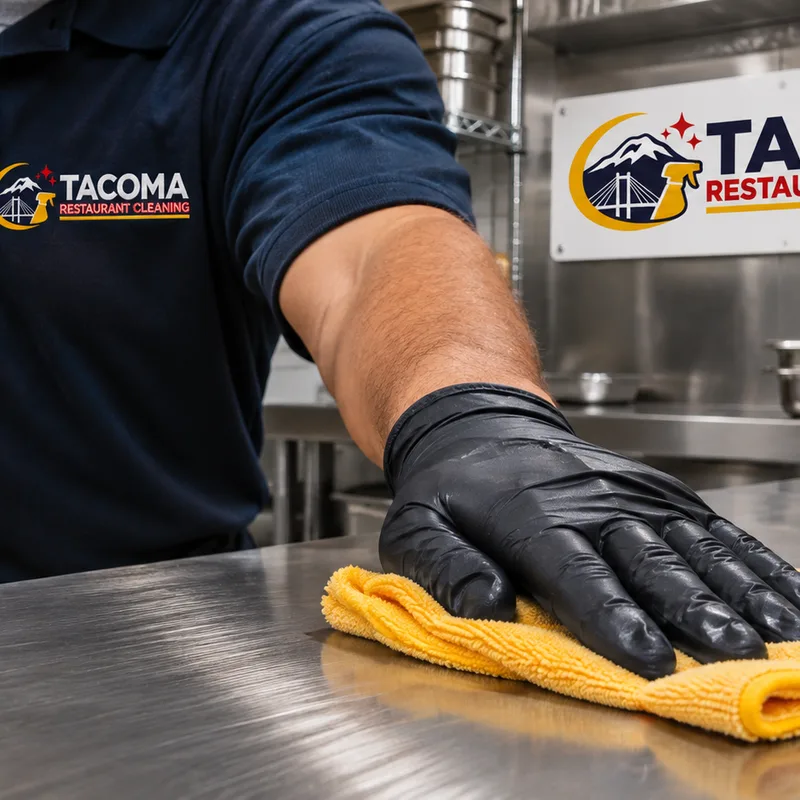
A gloved cleaner wiping a stainless steel preparation table with the grain after soil removal.
Surface-specific detailing

Clear Scope and Boundaries

Choosing a Kitchen Cleaning Company

Ask for a scope that names the equipment, surfaces, and access conditions included in the price. Terms such as “deep clean” can mean very different things. A clear proposal should state whether work covers appliance exteriors, removable parts, areas under equipment, walls, floors, drains, storage fixtures, or only selected zones.

The provider should also explain preparation. Hot equipment cannot be cleaned safely, and chemicals should never be applied casually around food, exposed utensils, electrical controls, pilot assemblies, or sensitive finishes. Safety Data Sheets should be available for cleaning products, and chemical use should follow product labels. Sanitizing, when requested and appropriate, is a separate step performed after a surface has first been cleaned.

Commercial kitchen cleaning is also distinct from servicing fire-suppression systems or cleaning an entire exhaust system. Filters, hoods, ducts, and fans may have separate access and service requirements. Confirm these boundaries in writing so the scheduled work matches what your operation expects.
Describe your kitchen, operating schedule, equipment, and priority areas to receive a practical scope built around the work your facility actually needs.

Call for a Free Quote

Common Questions

Questions About Restaurant Kitchen Cleaners in Tacoma

How often should a restaurant schedule commercial kitchen deep cleaning?

The right frequency depends on cooking volume, menu, equipment use, and how much detailed cleaning the staff completes between visits. Frying and high-heat cooking can create faster grease and carbon accumulation than light preparation. Many operators use recurring visits for floors and line areas, then schedule broader projects as conditions require. Tacoma Restaurant Cleaning can recommend an interval after reviewing the kitchen rather than assigning a generic schedule.

Can professional kitchen cleaning be completed after closing?

After-hours cleaning can often be arranged when access, staffing, and the amount of work allow it. The kitchen still needs enough shutdown time for equipment to cool, cleaning to be completed, surfaces to dry, and staff to prepare safely for the next service. Restaurants in Downtown Tacoma and other mixed-use districts should also account for building access, parking, noise limits, and security procedures.

Does kitchen equipment need to be turned off before cleaning?

Cooking equipment generally needs to be shut down and fully cooled before cleaning begins. The operator should follow manufacturer shutdown instructions and arrange qualified help for gas, electrical, refrigeration, or fire-suppression components when required. The confirmed preparation plan will identify which units must be off and when cleaners need access.

Do you clean underneath and behind commercial kitchen equipment?

Accessible areas underneath and behind equipment can be included when the units can be moved safely and without disconnecting regulated utilities. Heavy, fixed, hard-piped, or built-in equipment may require a qualified technician or facility representative. A pre-service assessment establishes access so hidden floor and wall areas are not assumed to be included.

Are cleaning and sanitizing the same service?

Cleaning and sanitizing are separate steps. Cleaning removes food residue, grease, and soil; an appropriate sanitizer is then used on a cleaned surface when that treatment is included and suitable for the area. Product labels govern dilution, contact time, and approved uses. Tell us which food-contact and non-food-contact areas are priorities so the scope can distinguish the required work.

How long does restaurant kitchen cleaning take?

A focused project may take several hours, while a full deep clean of a large or heavily soiled kitchen can require a longer shutdown window or staged visits. Equipment count, carbon buildup, movable fixtures, floor condition, water access, and drying time all affect duration. The expected work window is set after the scope is reviewed.

What should our staff do before the cleaners arrive?

Staff should remove or secure food, utensils, cookware, packaging, and loose items from the scheduled work zones. Equipment should be shut down and cooled according to the preparation plan, and cleaners need clear access to approved water sources, drains, service entrances, and parking or loading areas. Any alarm, key, elevator, or mixed-use building procedure should be shared before the appointment.

Define the Right Scope

Plan a Cleaner, More Manageable Kitchen

Tell Tacoma Restaurant Cleaning what needs attention and when your kitchen is available. We will define the included areas, preparation requirements, and schedule before work begins.