Restaurant Cleaning · Tacoma

Restaurant Cleaning Company

Detailed commercial kitchen care built around your equipment, operating hours, food-safety priorities, and the condition of the space.

✓Kitchen and cookline care ✓Walk-in cooler cleaning ✓One-time or recurring scope
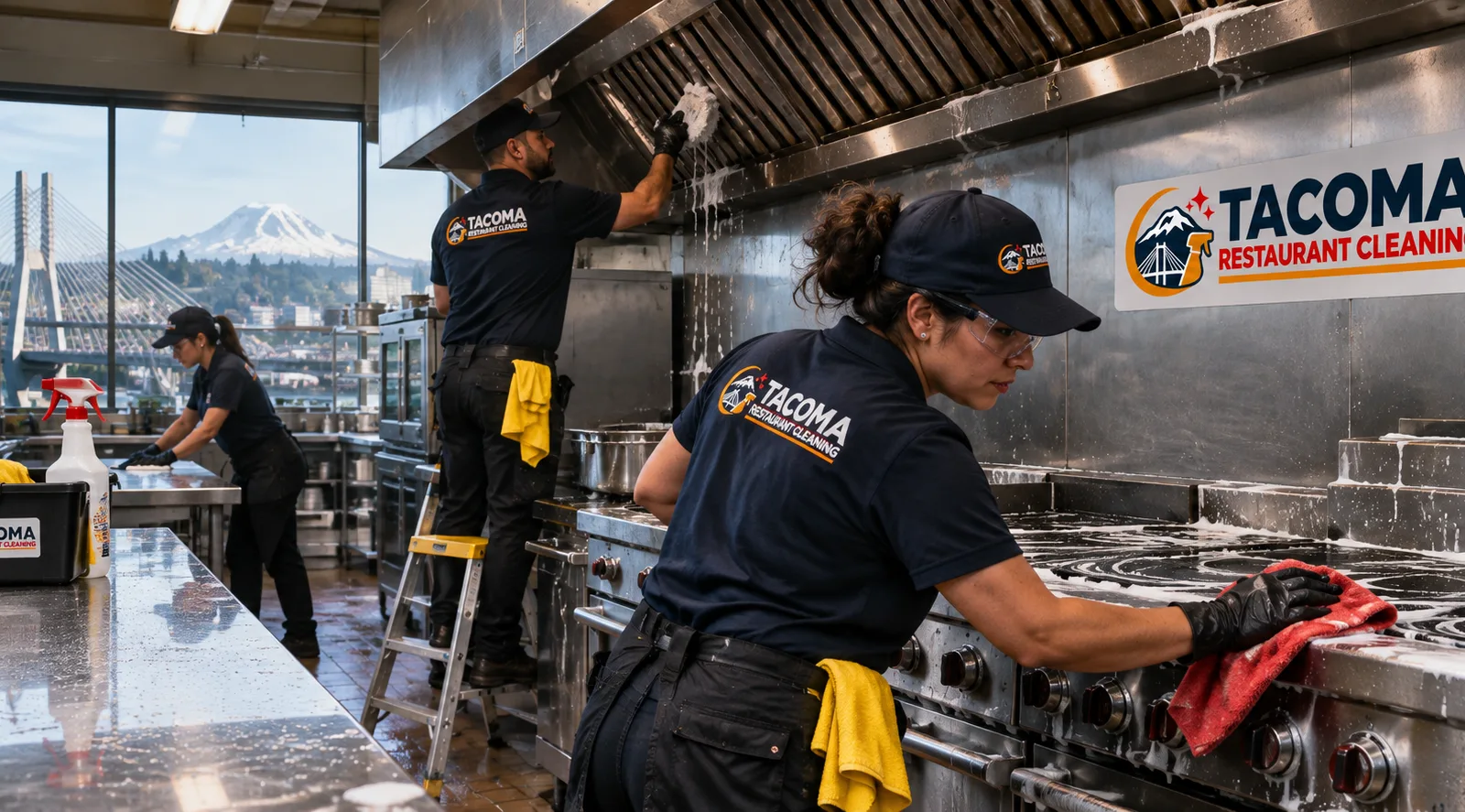
A trained cleaning crew deep cleaning stainless steel cooking equipment and surrounding surfaces in a Tacoma commercial kitchen after service.

Built Around Working Kitchens

Restaurant Deep Cleaning Tacoma Kitchens Can Plan Around

A Restaurant Cleaning Company should understand that a working kitchen cannot be treated like an ordinary office. Grease migrates beyond the cookline, food debris collects under equipment, and condensation can contribute to residue in refrigeration areas. Tacoma Restaurant Cleaning develops a written scope around the kitchen layout, surface materials, equipment access, current soil level, and the hours available for work.

We handle the work as Tacoma's local restaurant service, focusing on prep areas, cooklines, storage zones, walk-in units, walls, floors, and hard-to-reach overhead surfaces. The goal is a cleaner, more manageable facility without interfering unnecessarily with service. Scope can be built for a one-time reset, inspection preparation, seasonal care, or recurring deep cleaning.

Tacoma's mix of independent restaurants, bars, cafés, and high-volume kitchens creates different access needs. A compact Stadium District kitchen may have tight equipment clearances, while a larger operation near the Tacoma Mall area may need work divided into zones. Downtown kitchens often require careful scheduling around deliveries and customer traffic. The cleaning plan should account for those practical conditions before the crew arrives.

Detailed Service Scope

Professional Restaurant Deep Cleaning by Area

Kitchen Deep Cleaning

Detailed cleaning can address floors, walls, baseboards, prep surfaces, shelving, splash areas, and accessible spaces around or beneath equipment. The agreed scope identifies what will be moved, what must remain connected, and which areas need the most labor.

Cookline Degreasing

Grease removal around fryers, ranges, ovens, grills, and nearby surfaces requires suitable chemistry, dwell time, agitation, and thorough rinsing. Sensitive controls, pilot assemblies, electrical parts, and gas connections need protection.

Walk In Cooler Cleaning

Walk-in care may include floors, walls, shelving, door surfaces, gaskets, and accessible fan guards. Food must be removed or protected, and temperature-sensitive inventory needs an approved handling plan before work starts.

High Dusting Tacoma

Overhead pipes, ledges, vents, light housings, ceiling corners, and other elevated surfaces can collect dust and aerosolized grease. High dusting is planned before lower-level cleaning so loosened debris does not recontaminate finished areas.

Restaurant Detailed Cleaning

Detail work targets corners, casters, table legs, drains, kick plates, door tracks, handles, and edges that routine closing work can miss. The checklist is adjusted to the actual room rather than copied from a generic janitorial list.

Back-of-House Support Areas

Dish areas, dry storage, receiving zones, employee areas, and waste staging spaces can be included when listed in the scope. Each area receives methods suited to its surfaces, drainage, and food-contact risks.

Review the Work Before Service

Commercial Kitchen Deep Cleaning Tacoma Operators Can Review in Advance

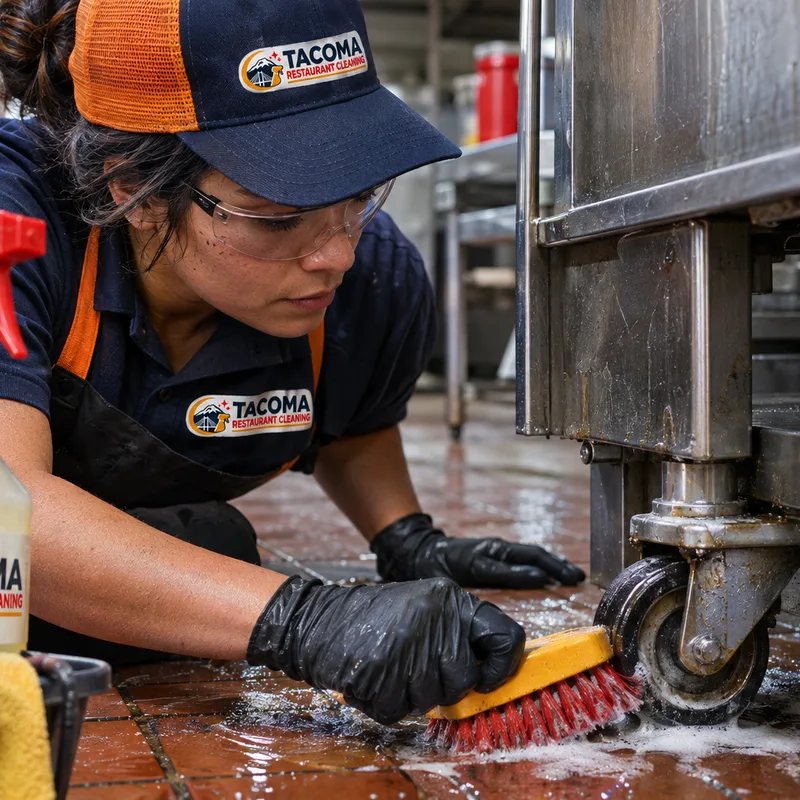
Close view of a restaurant cleaner detailing the floor and casters beneath movable stainless steel kitchen equipment using controlled degreasing methods.

Good cleaning starts with a clear boundary between included work and excluded work. Before service, the restaurant and cleaning team should identify food-contact surfaces, removable parts, equipment that may be shifted safely, utilities that cannot be disturbed, and areas that need authorized access. This protects the kitchen and helps the crew bring appropriate tools and chemistry.

Professional restaurant deep cleaning commonly uses scraping, degreaser application, dwell time, hand agitation, detail brushing, wet extraction, and controlled rinsing where drainage permits. A stronger chemical is not automatically a better choice. Product compatibility matters on aluminum, stainless steel, painted surfaces, quarry tile, grout, rubber gaskets, and sealed flooring. Food-contact surfaces require a final treatment consistent with the product label and the restaurant's sanitation procedure.

Deep cleaning supports a restaurant's food-safety program, but it does not replace daily cleaning, sanitizing, pest management, equipment maintenance, or regulatory compliance. Tacoma food establishments operate under the oversight of the Tacoma-Pierce County Health Department. Operators remain responsible for their own food-safety procedures and inspection readiness.
From Review to Completion

How Restaurant Deep Cleaning Services Are Organized

  1. Discuss the Facility and Priorities

    The first conversation covers kitchen size, operating schedule, soil conditions, access limitations, refrigeration areas, overhead buildup, and the reason for service. Photos or an on-site review may be needed for an accurate scope.

  2. Build a Written Scope

    The work plan lists included rooms, surfaces, equipment exteriors, access expectations, exclusions, and scheduling details. Any need to move equipment, protect inventory, or coordinate shutdowns is addressed before cleaning begins.

  3. Prepare the Kitchen

    Restaurant staff secure food, smallwares, personal items, and sensitive inventory according to the agreed plan. The cleaning crew sets containment or floor protection where needed and confirms that restricted equipment remains untouched.

  4. Clean in a Controlled Order

    Work generally proceeds from high surfaces to low surfaces and from less soiled areas toward heavier grease zones. Crews apply methods appropriate to each material, manage wastewater, and avoid spreading residue into completed areas.

  5. Review the Completed Scope

    The final review compares completed work with the checklist and identifies any inaccessible area or maintenance concern observed during cleaning. Recurring intervals can then be adjusted based on cooking volume and how quickly buildup returns.

Temperature-Controlled Areas

Walk In Cooler Cleaning Requires Its Own Plan

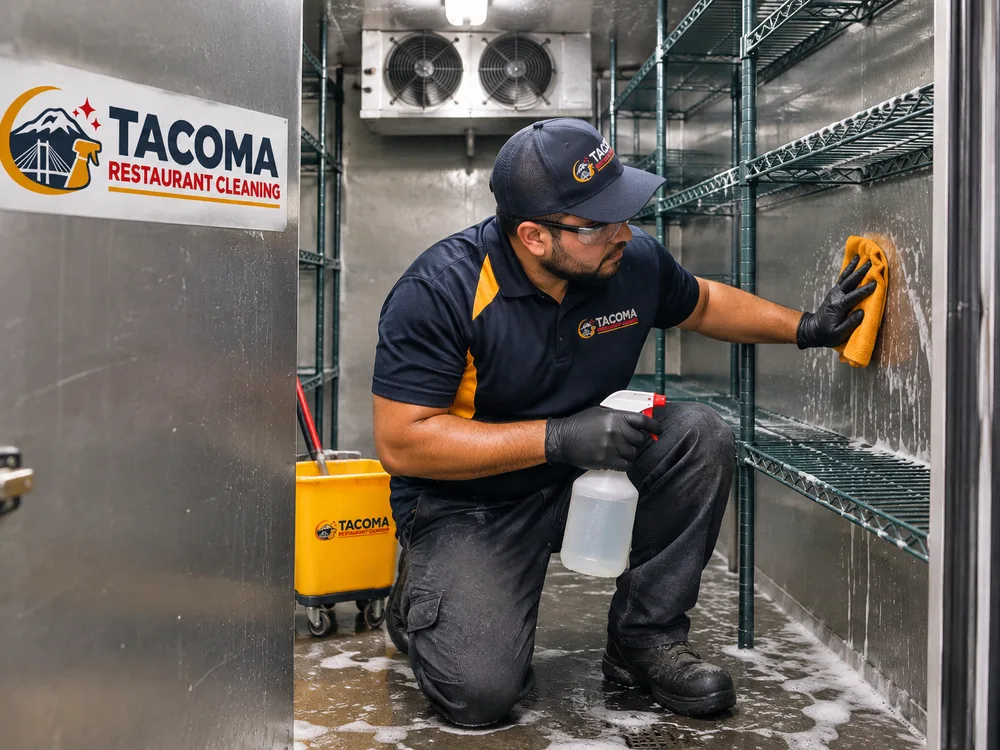
An emptied restaurant walk-in cooler being carefully cleaned, with shelving, wall panels, door gasket, and floor visible for detailed work.

A walk-in cooler is a temperature-controlled food-storage environment, so cleaning cannot begin until the restaurant has a safe plan for inventory. Open food, packaging, shelving contents, and temperature-sensitive products may need to be removed or protected. The operator decides how food will be handled and how required temperatures will be maintained.

Once access is clear, cleaning may cover shelving, walls, floors, door interiors, thresholds, gaskets, and accessible guards. Heavy ice, persistent water, damaged seals, unusual odors, or mechanical problems can indicate a refrigeration or drainage issue that cleaning alone will not correct. Evaporator components and electrical assemblies should not be saturated.

Tacoma's cool, wet winters make moisture control around exterior walk-in doors, receiving areas, and floor transitions especially practical. Crews should avoid leaving standing water, and the restaurant should address leaks or failed seals that allow moisture to return. Cleaning removes soil. It does not repair the source of recurring condensation.

Clear Scope and Boundaries

Choosing Restaurant Deep Cleaners

Choose a company that asks operational questions before discussing a schedule. The cleaner should want to know whether the kitchen uses fryers, solid-fuel cooking, heavy wok cooking, or high-volume baking because the soil type and affected surfaces differ. Ask how the team protects controls, handles food-contact surfaces, manages wastewater, and documents excluded areas.

The quote should distinguish routine janitorial work from a true deep clean. Emptying trash and mopping open floor space do not address grease behind equipment, buildup on elevated ledges, or detail work along edges and casters. Confirm whether equipment movement is included, who is authorized to disconnect anything, and whether the restaurant must provide access to drains or water.

Exhaust hood and duct cleaning is a specialized fire-safety service and should not be assumed to be part of general kitchen deep cleaning. Grease interceptor pumping, pest control, mold remediation, and equipment repair also require separate scopes or qualified providers. Clear limits help the operator coordinate each trade without leaving a problem unassigned.

Get a written cleaning scope based on your kitchen layout, operating schedule, refrigeration areas, overhead surfaces, and current level of buildup.

Call for a Free Quote

Common Questions

Questions About Restaurant Detailed Cleaning

How much does restaurant deep cleaning cost in Tacoma?

Pricing depends on kitchen size, grease level, equipment access, requested areas, and the labor needed outside operating hours. A compact kitchen with accessible surfaces costs less than a high-volume facility requiring equipment movement, high dusting, or walk-in cooler cleaning. Tacoma Restaurant Cleaning reviews the facility requirements before confirming a written price.

How long does a commercial kitchen deep cleaning take?

A deep clean may require part of a shift or an extended overnight window, depending on the scope. Heavy cookline grease, crowded equipment, overhead work, and refrigeration areas add time. Downtown Tacoma access, loading arrangements, and building security can also affect setup and departure timing.

Can cleaning be scheduled when the restaurant is closed?

Yes, work can be planned around closed hours when crew availability and building access allow. The restaurant should confirm keys, alarm procedures, loading access, water availability, and the time by which the kitchen must be ready for reopening.

Do restaurant staff need to remove food before deep cleaning?

Food and exposed smallwares generally need to be removed, sealed, or protected before work begins. Walk-in cooler cleaning requires an operator-approved plan for temperature-controlled inventory. The exact preparation duties should be listed in the scope so the crew can start on time.

Will the cleaners move fryers, ranges, and refrigerators?

Equipment is moved only when the scope, weight, connections, clearances, and safety conditions allow it. Cleaning crews should not disconnect gas, hardwired electrical, water, or refrigeration lines unless they are specifically qualified and authorized to do so. Accessible areas can be cleaned without disturbing fixed connections.

How often should a Tacoma restaurant schedule kitchen deep cleaning?

The interval should be based on cooking volume, menu, equipment layout, grease production, and the effectiveness of daily cleaning. A fryer-heavy kitchen may need detailed cookline work more often than a low-grease café. An initial service provides a practical baseline for setting future visits.

Does high dusting include the exhaust hood and duct system?

High dusting can cover accessible pipes, ledges, vents, light housings, and similar overhead surfaces, but it does not automatically include exhaust hood, fan, or duct cleaning. Commercial cooking exhaust systems require a separate, clearly defined scope from an appropriate specialist.

Can deep cleaning guarantee a passing health inspection?

No cleaning company can guarantee an inspection result because inspectors evaluate food handling, temperatures, storage, employee practices, equipment condition, pest evidence, and other requirements. Detailed cleaning can address agreed soil and buildup, while Tacoma-Pierce County Health Department compliance remains the operator's responsibility.

Define the Right Scope

Plan a Cleaner, More Manageable Kitchen

Describe the facility, problem areas, operating hours, and timing needs. Tacoma Restaurant Cleaning will help define the work and prepare a clear scope before service.